


Commercial flooring is a practical choice for spaces that need to handle regular foot traffic, frequent cleaning and everyday operational demands while maintaining a professional appearance.
At Melbourne Flooring, we supply and install a wide range of commercial flooring products across Melbourne, helping businesses compare materials, colours, finishes, performance requirements and installation options before making a decision.
Our commercial flooring range includes vinyl sheet, vinyl plank, vinyl tile, carpet tiles, linoleum and selected hybrid flooring options for offices, retail stores, healthcare facilities, education environments, hospitality venues, showrooms and other high-use interiors.
When selecting flooring for a commercial space, it is important to consider:
For businesses comparing commercial flooring options, the right product is rarely determined by appearance alone. Carpet tiles can provide comfort and acoustic benefits, vinyl flooring offers practical cleaning and design flexibility, while linoleum and other resilient surfaces can suit demanding high-use environments. The aim is to match the flooring to the way the space actually operates, so it performs well long after installation.


Commercial flooring should be selected around the way the space operates, not simply by appearance. An office, retail entrance, healthcare environment and hospitality venue can place very different demands on a floor, even when a similar visual style is required.
Before comparing individual products, consider the factors that will have the greatest impact on performance, maintenance and installation.
1- Foot Traffic and Daily Use: Start with how the area will be used and where the highest levels of traffic will occur. Entrances, corridors, service areas and frequently used work zones may need different flooring characteristics from meeting rooms, private offices or low-traffic areas. Movement from chairs, trolleys, furniture or equipment should also be considered where relevant. The individual product specification should be checked against the intended application rather than assuming every product within a flooring category performs the same way.
2- Cleaning, Moisture and Maintenance: Cleaning requirements can significantly influence flooring selection. A workplace, retail store, healthcare facility and hospitality environment may each have different cleaning frequencies, maintenance methods and potential exposure to moisture. Consider how easily the flooring can be maintained, whether damaged areas can be repaired or replaced, and whether the product is suitable for the cleaning regime required by the space.
3- Safety, Acoustics and Comfort: Slip requirements, acoustic performance and comfort underfoot can become important depending on the environment. Carpet tiles may be useful where acoustics and comfort are priorities, while resilient flooring can be better suited to areas requiring different cleaning and maintenance characteristics. These requirements should be assessed against the actual product specification and project needs rather than applied broadly to an entire flooring type.
4- Subfloor and Installation Requirements: The condition of the existing subfloor can affect both the flooring system and the overall project cost. Uneven surfaces, moisture, existing coverings and other site conditions may require preparation before installation can begin. Installation timing should also be considered early, particularly for operating businesses. Access, staged works, furniture movement, transitions between different flooring types and the need to minimise disruption can all influence which flooring system is most practical for the project.
There is no single flooring material that suits every commercial environment. The right choice depends on how each area is used, the level of traffic it receives and the maintenance and performance requirements of the project.
Commercial carpet tiles are widely used in offices, meeting rooms and other workplace environments where comfort, acoustics and modular replacement are important considerations.
Because individual tiles can generally be accessed or replaced without removing an entire floor area, carpet tiles can also be practical for spaces where maintenance and future changes need to be considered.
Explore our commercial carpet tiles for offices and business spaces to compare available ranges, colours and product specifications.
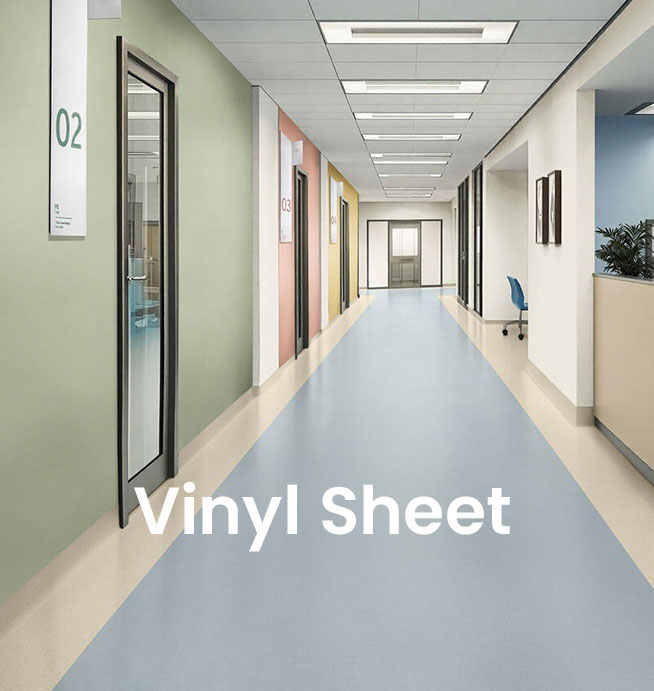
Vinyl sheet can be considered for commercial areas requiring a resilient surface that is practical to clean. Selected commercial ranges are designed for higher-use environments, but performance varies between products, so factors such as slip requirements, wear characteristics and maintenance should be checked against the specification for the selected range.
It may be particularly useful where a project benefits from fewer joins across the floor compared with plank or tile formats.
View our vinyl sheet flooring for commercial spaces to compare suitable options.
Vinyl plank is well suited to commercial interiors where a timber-look finish is preferred without using natural timber. The plank format can work particularly well in offices, retail stores, showrooms, reception areas and other customer-facing spaces where the flooring contributes to the overall interior design.
Commercial suitability varies between products, so the wear layer, construction, installation method and manufacturer rating should be checked against the expected level of foot traffic and day-to-day use. The plank format can also make localised replacement more practical where the selected product and installation system allow individual sections to be accessed.
Explore vinyl plank flooring options for commercial projects and compare the specifications of individual ranges before selecting a product.
Vinyl tile provides a modular flooring format for commercial spaces where stone, concrete, geometric or other tile-style appearances are preferred. Different tile sizes, colours and patterns can also be used to create defined areas or visual transitions within larger interiors.
The appropriate product should be selected according to its commercial rating, wear characteristics, installation system and the conditions of the space. Because the floor is made up of individual tiles, selected systems may also allow damaged or worn sections to be replaced without disturbing the entire floor.
Explore vinyl tile flooring for commercial interiors to compare available designs and product specifications.
Linoleum is another resilient flooring option available for selected commercial environments. Product construction, maintenance requirements and suitability vary between ranges, so the specification should be assessed against the traffic and operational requirements of the space.
Explore our commercial linoleum flooring options for more information.

A commercial floor has to perform after the project has been handed over, not simply look good on installation day.
Before selecting a product, consider:
A quiet office, busy retail entrance and frequently cleaned healthcare environment can require very different flooring characteristics even when the desired appearance is similar.
Manufacturer specifications should therefore be reviewed for the actual product being considered rather than applying a general performance claim to an entire flooring category.
1. Offices and Workplaces
Office flooring often needs to balance appearance, acoustics, comfort, maintenance and the ability to manage localised wear.
Carpet tiles can work well across open-plan offices and meeting spaces, while resilient flooring such as vinyl may be useful in reception areas, breakout spaces, kitchens or other areas where different cleaning requirements apply.
Using more than one flooring type can also help define separate functional zones within the workplace.
2. Retail Stores and Showrooms
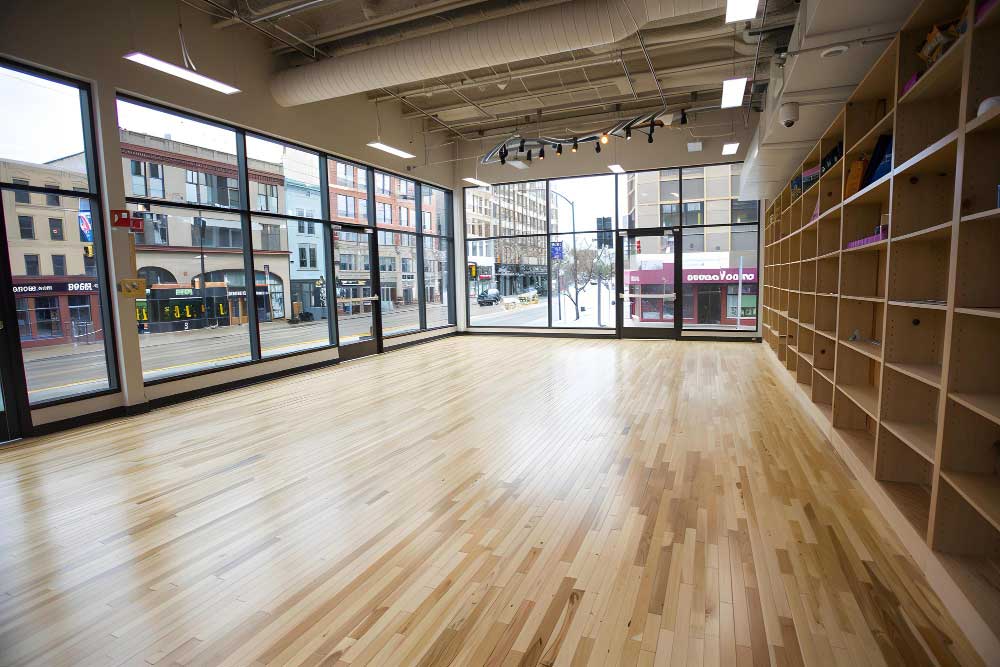
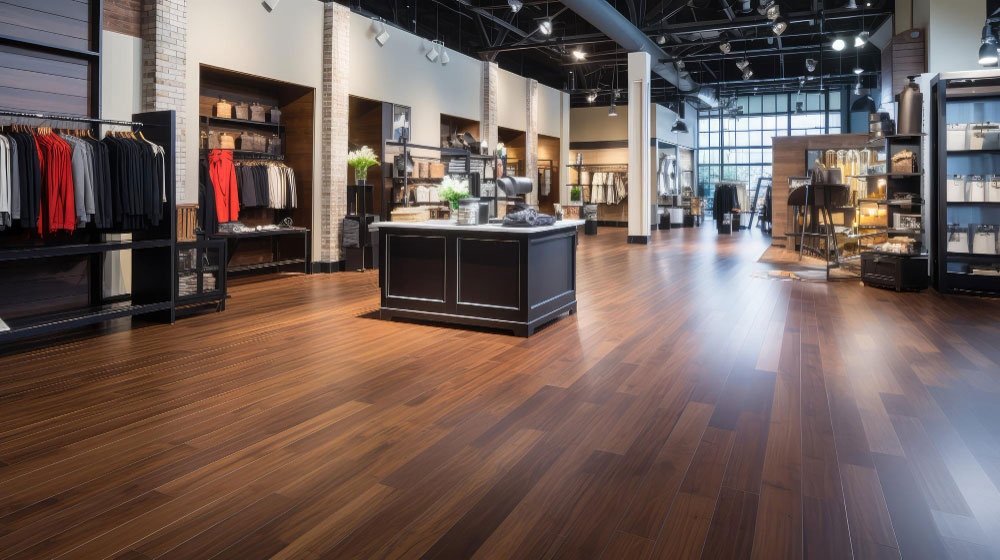
Retail flooring needs to complement the presentation of the space while accounting for regular customer traffic, displays, shelving and cleaning.
The appropriate floor will depend on the volume and type of traffic, the layout of the store, maintenance requirements and whether sections may need to be repaired or replaced in the future.
Vinyl, carpet tiles and selected other commercial-rated products provide different combinations of appearance, maintenance and installation flexibility.
3. Healthcare Environments
Healthcare and consulting environments can place greater emphasis on cleaning, maintenance, slip performance and the transitions between flooring surfaces.
The exact requirements can vary considerably between reception areas, consultation spaces, corridors and other rooms, so the relevant product specification and project requirements should be reviewed before a flooring system is selected.
4. Education Facilities
Classrooms, administrative areas, corridors and shared spaces can experience different levels of traffic and have different acoustic and maintenance requirements.
Flooring selection should therefore consider the actual use of each zone rather than specifying one material across the entire project solely for visual consistency.
5. Hospitality and Customer-Facing Spaces
Hospitality venues may require different flooring solutions across dining areas, customer zones, corridors and service areas.
Appearance is important, but maintenance, expected traffic, moisture exposure, slip requirements and the ability to coordinate installation around operating hours also need to be considered.


Melbourne Flooring has been active in the construction industry since 2007 and works across residential and commercial flooring projects.
Our commercial flooring service brings product selection, samples, site measurement, supply and installation into one process. Customers can compare flooring options through our range, visit our Bayswater or Oakleigh locations, or discuss sample selection and project requirements with the team.
The objective is not simply to nominate a flooring material. It is to identify a product and installation approach suited to the way the space will actually be used.
Commercial flooring refers to flooring selected for business and public-use environments where factors such as foot traffic, maintenance, cleaning, safety, acoustics and operational requirements may be more important than in a typical residential space. The appropriate material depends on how the individual area is used.
There is no single best option for every office. Carpet tiles can be useful where acoustics, comfort and modular replacement are important, while vinyl and other resilient floors may suit reception areas, kitchens, breakout spaces or areas requiring different cleaning characteristics.
Yes, selected vinyl products are designed or rated for commercial applications. The product's wear characteristics, installation method, slip requirements and manufacturer specification should be checked against the intended use rather than assuming every vinyl floor is suitable for the same level of commercial traffic.
Cost depends on the flooring type, product specification, project size, preparation and installation requirements. Selected supply-only products currently start from $29 per square metre for carpet tiles, $28 per square metre for vinyl plank, $35 per square metre for vinyl sheet and $28 per square metre for vinyl tile. Final commercial project pricing requires a quote based on the selected product and site requirements.
Sometimes, but only where the existing surface and the selected flooring system are compatible. The existing floor needs to be assessed for stability, level, condition, moisture and any preparation requirements before deciding whether removal is necessary.
Preparation can include removal of existing flooring, repairs, levelling and other work required to create a suitable surface. The exact requirements depend on the existing floor, site conditions and installation method.
Some projects can be staged to reduce disruption, depending on the flooring system, preparation requirements, site access and operating hours. Staging should be planned before installation rather than after work begins.

Let's socialize
Copyright © 2018 Melbourne Flooring . All rights reserved. Designed by Momawebmasters
Monday - Friday 9AM - 5PM
Saturday 10AM - 3PM
Sunday by appointment only
Bayswater Branch
Address: 20 Scoresby Road, Bayswater VIC 3153
Phone: 03 9070 8292
Oakleigh Branch
Address: 200 Warrigal Rd, Oakleigh VIC 3166
Phone: 03 4060 1415