


Most kitchen accidents don’t happen because someone ran across the room. They happen because water, oil, or food hits the floor and the surface underneath offers zero grip.
Kitchens combine moisture, movement, and hard surfaces. That mix makes flooring choice less about style and more about risk management. Non slip vinyl flooring for kitchens is designed specifically for these conditions, offering waterproof performance with added traction that reduces the likelihood of falls.
Before committing to a material, reviewing different vinyl flooring solutions helps clarify how slip resistance, wear layers, and surface texture actually affect day-to-day performance.
What Actually Makes a Floor “Slip Resistant”?
Not all textured floors are genuinely non slip.
True non slip vinyl flooring for kitchens is tested under recognised slip resistance standards. These ratings measure how much friction a surface maintains under wet conditions.
The main factors that influence grip:
- Surface embossing depth
- Coating technology
- Wear layer composition
- Cleaning residue build-up
A slightly textured surface with a high-quality wear layer often performs better long term than an aggressively rough finish that traps dirt.
The Real-World Test — Daily Kitchen Use
Imagine the typical week:
- Water spills near the sink
- Oil splashes from cooking
- Kids running in and out
- Chairs dragged across the floor
- Frequent mopping
Non slip vinyl flooring for kitchens handles this combination better than polished tiles or laminate because:
- It does not absorb moisture.
- The rigid or reinforced core resists swelling.
- The surface maintains traction when lightly wet.
However, slip resistance decreases if grease builds up. No surface is immune to poor maintenance.
Where It Outperforms Other Materials
Compared to ceramic tile:
Vinyl is warmer and softer underfoot.
Compared to laminate:
It performs better in wet conditions.
Compared to engineered timber:
It tolerates spills without edge swelling.
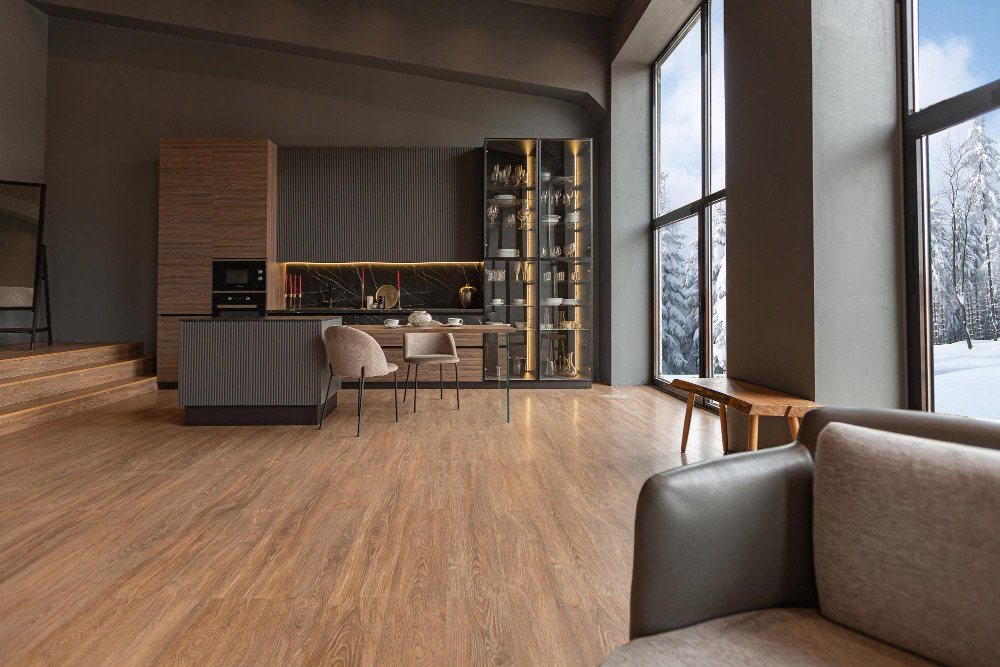
Non slip vinyl flooring for kitchens becomes especially practical in open-plan spaces where the kitchen blends into living areas. You get continuity without sacrificing safety.
Where It Might Not Be Perfect
Let’s be realistic.
- Extremely sharp objects can still damage the surface.
- Entry-level products may show wear faster.
- Subfloor imperfections can telegraph through thinner vinyl.
The phrase “waterproof” doesn’t mean immune to installation mistakes. Expansion gaps and proper levelling still matter.
Non slip vinyl flooring for kitchens improves safety, but it does not eliminate responsibility for proper cleaning and care.
Cost vs Long-Term Value
Pricing varies depending on:
- Wear layer thickness
- Core density
- Slip rating classification
- Installation complexity
Lower-cost vinyl may lack the durability needed for busy kitchens. Investing slightly more in a thicker wear layer can extend lifespan significantly.
In many homes, non slip vinyl flooring for kitchens offers a practical middle ground between budget laminate and higher-cost engineered timber.
Should You Choose It?
It makes sense if:
- You prioritise safety
- You cook frequently
- You have children or older family members
- You want waterproof protection
It may not be ideal if:
- You want a floor that can be refinished later
- You prefer ultra-premium natural materials
The key is matching surface performance to real usage patterns, not just showroom appearance.
Professional Guidance
Melbourne Flooring supplies and installs non slip vinyl flooring for kitchens, providing advice on slip ratings, surface textures, and correct installation methods. The focus is on durable, properly prepared flooring that performs reliably in everyday conditions. Contact us for a free quote.