




A commercial flooring quote can appear complete while still leaving important details unresolved. A product name and square-metre rate might be included, but traffic levels, subfloor preparation, access restrictions, furniture movement and installation requirements can significantly change the final scope.
For businesses considering commercial vinyl flooring options in Melbourne, the starting point should be how the site operates rather than simply choosing between sheet, plank or tile. The flooring needs to suit the expected traffic, cleaning routine, environment and existing floor conditions.
A clear project brief also makes quotations easier to compare. When each supplier is pricing the same product requirements, preparation and installation scope, it becomes much easier to understand where the differences actually are.
What to Check Before Comparing Commercial Vinyl Flooring Quotes
A useful quote should explain more than the cost of the flooring itself. It should show what is being supplied, what preparation is included, how installation will be completed and which site conditions could affect the project.
Start With How Each Area Is Used
The same vinyl product will not necessarily suit every part of a commercial site.
A reception area may experience continuous foot traffic and need to maintain a professional appearance. A private meeting room might receive comparatively little use. Corridors can experience repeated movement along the same pathways, while kitchens and breakout areas may require more frequent cleaning.
Before requesting pricing, record how each area will be used.
Useful information includes:
- Approximate daily foot traffic
- Rolling chairs or trolleys
- Mobile equipment
- Exposure to water or spills
- Cleaning frequency
- Fixed furniture or equipment
- Customer-facing versus back-of-house use
- Expected duration of the fit-out
- Areas likely to need future repairs
This gives the flooring specification a practical basis before products are shortlisted.
Specify the Vinyl Format
“Commercial vinyl” is too broad to be a complete flooring specification.
Commercial vinyl flooring is available in formats such as:
- Vinyl sheet
- Vinyl plank
- Vinyl tile
Each can create a different appearance, installation method and maintenance approach.
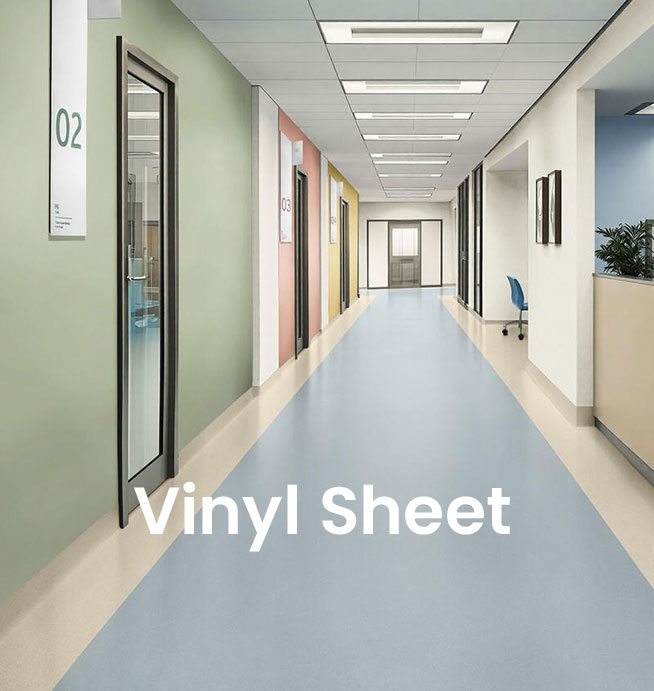
Vinyl sheet can provide broad continuous coverage with fewer joins across a space. Vinyl plank can create a timber-look finish for offices, reception areas, retail environments and other interiors. Vinyl tile can support modular layouts and zoning.
The quote should identify the actual flooring being supplied rather than describing it simply as commercial vinyl.
Where possible, record:
- Manufacturer
- Product range
- Colour
- Format
- Dimensions
- Product code
That makes it easier to confirm that different quotes are based on the same product.
Match the Product to the Traffic Level
Room names alone do not tell you how hard a floor will work.
Two offices can have completely different traffic patterns.
A small professional office may have limited visitors, while a busy service centre can have continuous movement between reception, workstations, meeting areas and entrances.
Retail premises can also contain both quiet areas and heavily travelled customer pathways.
Compare flooring that is designed for a similar level of use rather than assuming every commercial vinyl product has the same performance characteristics.
Traffic should be considered alongside:
- Cleaning frequency
- Rolling loads
- Spills
- Furniture movement
- Expected service life
- Repair requirements
When product selection is still open, commercial vinyl flooring for high-use spaces provides a more useful starting point than choosing a product primarily from its colour or pattern.
Check the Existing Subfloor
The condition beneath the flooring can substantially affect both installation and cost.
Existing adhesive, cracks, uneven sections, damaged screed, old flooring and moisture conditions may all require attention before new vinyl can be installed.
A quotation should explain whether the existing floor has been assessed and what preparation has been included.
Depending on the site, preparation may involve:
- Removing existing flooring
- Removing old adhesive or residue
- Repairing damaged areas
- Levelling uneven sections
- Applying primer or smoothing compounds
- Assessing moisture conditions
- Preparing changes between floor heights
Be cautious with vague allowances such as “floor preparation as required”.
Ask what work and materials that allowance actually includes.
Subfloor preparation can influence the budget, programme and finished result just as much as the flooring product itself.
Clarify Furniture and Equipment Responsibilities
A vacant tenancy is much simpler to floor than an occupied workplace.
Desks, shelving, stock, displays, treatment equipment or other items may need to be moved before installation begins.
In staged projects, some furniture may need to be relocated several times as work moves through the site.
Before accepting a quotation, establish:
- Whether the site will be empty
- Whether furniture movement is included
- Which items installers cannot move
- Whether fixed equipment will remain in place
- Whether the work needs to be staged
- Who is responsible for clearing each area
These responsibilities should be agreed before installation day.
Confirm Access and Operating Restrictions
Commercial flooring projects often need to work around an operating business.
The installation plan may be affected by:
- Building access hours
- Security procedures
- Loading zones
- Lift availability
- Shared corridors
- Noise restrictions
- Customer access
- Other contractors
- Business operating hours
Identify which parts of the premises must remain usable and when particular areas can be taken out of service.
The point at which installation is physically complete may also differ from when the floor can return to full use.
Preparation products, adhesives and flooring systems can have specific drying or curing requirements, so reopening times should be based on the products actually being used.
Include Cleaning Requirements in the Specification
Maintenance should be considered before the flooring is approved.
A busy reception area may have a different cleaning routine from a private office. Retail, healthcare, education and hospitality environments can also place different demands on the floor.
Before approving a product, check:
- Routine cleaning method
- Recommended cleaning products
- Equipment restrictions
- Spill-management requirements
- Initial cleaning after installation
- Periodic maintenance
- Treatments or coatings that should be avoided
A flooring product can have appropriate performance specifications but still become impractical if its maintenance requirements do not match the way the site is managed.
Consider Localised Repairs
Commercial flooring may remain in place for many years, so consider what happens if a small area becomes damaged.
The repair process can vary depending on the vinyl format and installation system.
Planks and tiles can have different localised replacement requirements from sheet flooring, and matching material may not remain available indefinitely.
Before finalising the order, ask:
- Can damaged areas be replaced locally?
- How would the affected flooring be accessed?
- Should spare material be retained?
- Could repairs disrupt surrounding flooring?
- Are there specific repair requirements under the warranty?
Keeping a small quantity of spare material may make future repairs easier.
If spare flooring is retained, label it with:
- Manufacturer
- Range
- Colour
- Product code
- Batch information where available
- Original installation date
Plan Flooring Transitions Early
Commercial premises often combine several flooring types.
Vinyl may meet:
- Carpet tiles
- Existing timber
- Tile
- Linoleum
- Other resilient flooring
Doorways, lift entries and connections between different areas may therefore require transition details.
Finished heights can vary between flooring products, particularly once adhesives and preparation layers are included.
The quotation should identify where trims or transition profiles are required rather than leaving these details until installation.
Compare the Complete Project Cost
The material rate is only one part of the total flooring cost.
A clear quotation should identify or explain:
- Flooring product
- Quantity
- Wastage allowance
- Delivery
- Existing-floor removal
- Waste disposal
- Subfloor preparation
- Installation materials
- Labour
- Trims
- Transitions
- Furniture movement where included
- Access or staging requirements
- GST
This makes it easier to understand why two quotations with similar flooring prices may produce very different final totals.
A low square-metre material rate is less meaningful if important preparation or installation costs have not been included.
Use Samples to Confirm the Selected Product
Samples are useful for assessing colour, texture and pattern, but they should be connected to the actual product specification.
For larger projects, viewing several pieces together can help show how pattern and colour variation may appear across a larger area.
You can also compare commercial vinyl flooring samples before confirming the final product.
Keep the approved sample alongside the product details and quotation where practical.
The sample should confirm what has been specified rather than replace the written product information.
Check What Happens at Handover
Installation should not end without the information needed to manage the floor afterwards.
Depending on the project, useful handover information may include:
- Product details
- Maintenance instructions
- Warranty documentation
- Spare flooring
- Cleaning guidance
- Colour and product codes
- Repair information
This can be particularly useful for facilities managers, property managers and businesses that may need to maintain or repair the flooring years after installation.
Turn the Quote Into a Clear Project Scope
The most useful quotations reduce uncertainty before work starts.
They clearly identify:
- The selected product
- Subfloor preparation
- Installation method
- Site access
- Furniture responsibilities
- Transitions
- Staging requirements
- Exclusions
Not every condition can be known before existing flooring is removed, but the known requirements should still be documented clearly.
If the quotation contains broad allowances or unclear descriptions, ask for clarification before comparing it with another proposal.
A Better Quote Starts With Better Information
Choosing commercial vinyl flooring involves much more than comparing colours and square-metre rates.
Traffic, subfloor preparation, cleaning, furniture, access, transitions and future repairs can all affect the completed project.
Providing these details before pricing is finalised makes it easier to compare quotations on a like-for-like basis and identify whether important parts of the installation have been omitted.
Once the product requirements and site conditions are clear, request a site-specific quotation based on the actual project scope.