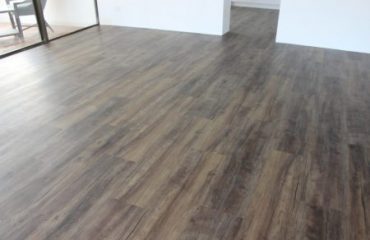


If you’re looking at new floors and keep hearing about click lock vinyl, you’ve probably realised it solves a lot of problems at once: it’s durable, often waterproof, kinder on the budget than timber, and relatively quick to fit.
But when it comes to actually installing click lock vinyl flooring, most people hit the same wall:
“Can I really do this myself, and what does the process actually involve?”
What is click-lock vinyl flooring?
Click lock vinyl flooring (often called hybrid click lock or click vinyl plank) is a floating floor system where each plank or tile locks together via a built-in joint profile. No glue, no nails, no mess stuck to your slab. At Melbourne Flooring, you’ll see click systems across: Vinyl planks with a Unilin click system, 100% water resistant and rated for domestic and commercial use
Hybrid click lock vinyl ranges are designed to combine the benefits of vinyl and laminate
Click lock systems are popular because:
- They’re quick to install once your subfloor is ready
- Individual boards can be replaced if damaged
- They can often go over existing hard floors (concrete, old vinyl, sometimes tiles) with minimal disruption
Before installing click lock vinyl flooring: preparation matters
The “click” part is easy. The prep is where people usually make a mess of it.
1. Check the subfloor
Click lock vinyl needs a flat, dry, clean base. That means:
- Concrete should be fully cured, dry and free from major cracks or high spots
- Old floor coverings (carpet, loose tiles, damaged vinyl) were removed where required
- Any adhesive residues or uneven patches scraped or levelled
Floating floors will follow whatever’s underneath. If the subfloor is lumpy, the final floor will feel spongy or hollow in spots and you risk joints opening over time. Professional installers will usually inspect and, if needed, grind or patch areas before installing click lock vinyl flooring.
2. Allow the boards to acclimatise
Most manufacturers recommend you:
- Store unopened boxes of click lock vinyl flat in the room
- Let them sit for at least 24–48 hours (check the product instructions)
This helps minimise movement after installation, especially in Melbourne’s constantly changing temperatures.
3. Gather the right tools
For a standard installation, you’ll typically need:
- Spacers (for expansion gaps)
- Tape measure and pencil
- Utility knife or vinyl cutter
- Straight edge or square
- Rubber mallet and tapping block (or manufacturer-approved tool)
- Pull bar for the last row
Step-by-step: installing click lock vinyl flooring
Every product has its own detailed instructions, but the general process for installing click lock vinyl flooring looks like this.
Step 1: Plan your layout
- Decide which direction you want the planks to run (usually along the length of the room or in the direction of natural light).
- Measure the room to see how wide the last row will be. If the final row would be very narrow, you may want to trim the first row slightly so the first and last rows end up similar in width.
This small planning step makes the finished floor look more balanced and professional.
Step 2: Install underlay (if required)
Many hybrid click lock vinyl boards have an acoustic underlay already attached. Others, especially some vinyl planks, may require a separate underlay for sound insulation and comfort.
- Roll out the underlay across the subfloor
- Butt edges together without overlapping
- Tape joins as recommended by the manufacturer
Follow the product guidelines: adding the wrong underlay or doubling up can cause movement or joint stress.
Step 3: Lay the first row
- Start along your longest, straightest wall
- Use spacers to leave the recommended expansion gap between planks and wall (often around 5–10 mm, but always follow the product instructions)
- Place the first plank with the tongue towards the wall (or as specified by the manufacturer)
If the wall isn’t perfectly straight (common in older homes), adjust the first row slightly so you don’t end up with a noticeable gap later.
Step 4: Lock in subsequent boards
For most click systems:
- Insert the end of the next plank at a slight angle into the previous plank
- Rotate it down so the joint engages
- Use a tapping block and mallet to gently close any micro-gaps
Stagger the end joints between rows (often by at least 30 cm) to create a natural pattern and maintain structural stability.
Step 5: Cut boards for the end of each row
When you reach the end of a row:
- Measure the remaining space
- Mark your board and cut it to length with a utility knife (score the surface and snap) or a suitable saw if recommended
- Use the off-cut to begin the next row where possible, maintaining proper joint stagger
This keeps waste low and the pattern natural.
Step 6: Work around doorways and obstacles
Door frames, built-ins and odd corners are where DIY enthusiasm usually starts dying.
- Lay a full board next to the obstacle, mark the exact cut needed, and transfer it to the board you’ll be fitting
- Cut carefully so the plank can slide under jambs or fit neatly around architraves and posts
Professional installers deal with these every day, which is why complex areas are better left to them if you want a crisp finish.
Step 7: Install the final row
The last row usually needs to be ripped lengthwise:
- Measure the gap between the last full row and the wall (minus the expansion gap)
- Mark and cut the boards
- Use a pull bar to pull the final row securely into place
Again, keep spacers at the walls until all trims are fitted.
Step 8: Add trims and transition pieces
Once the boards are down:
- Fit skirting or scotia/beading to cover the expansion gap (fix trims to the wall, not the floor)
- Install transition strips at doorways and between different flooring types
After a clean and quick check for any gaps or uneven joints, the floor is ready for use.
Common mistakes when installing click lock vinyl flooring
If you’re DIY-minded, pay particular attention to these:
- Skipping levelling
Laying click lock vinyl over an uneven floor is the fastest way to create soft spots, noisy joints and premature wear. - Forgetting expansion gaps
Fitting boards tight against walls or fixed cabinetry can cause lifting and buckling as the floor expands. - Mixing boxes incorrectly
You should open several boxes and mix boards as you go to avoid obvious repeating patterns. - Using the wrong underlay (or too much)
Over-cushioned floors can flex at the joints, stressing the click system. - Not following the manufacturer’s instructions
Each product has specific guidelines for installing click lock vinyl flooring; ignoring them can void warranties.
DIY vs professional installation
Click lock systems are marketed as “easy to install,” and for small, simple rooms, they can be. But consider professional installation if:
- You have large open areas, multiple rooms or an entire home to do
- Your subfloor has cracks, dips or previous flooring that needs assessing
- You’re working with wet areas like kitchens or laundries, where waterproof detailing is critical
- You have tight timelines and can’t afford a trial-and-error approach
We specialise in flooring supply and installation across Melbourne. Contact us for a free quote.