





Two carpet tiles can look almost identical in a sample display but perform very differently once they are installed. Colour and pattern are important, but the fibre, pile construction, backing system and intended traffic rating have a much greater influence on how the floor will look after regular use.
When comparing commercial carpet tiles for Melbourne offices and business interiors, the most useful question is not simply, “Which design looks best?” It is whether the complete product is suited to the traffic, furniture, cleaning routine and acoustic needs of the space.
Understanding a few technical details before ordering can help separate a genuinely suitable carpet tile from one that only performs well under showroom lighting.
Begin With the Way the Space Will Be Used
A carpet tile should be selected according to the busiest part of the project, not the quietest room.
A private meeting room may receive moderate traffic, while an office corridor, reception area or shared workspace can experience repeated movement throughout the day. Education facilities, retail interiors and hospitality spaces may also need to manage trolleys, chairs, equipment and frequent cleaning.
Before comparing products, identify:
- Expected daily foot traffic
- Rolling office chairs or mobile furniture
- Entry points exposed to dirt or moisture
- Areas requiring additional acoustic control
- Cleaning frequency
- Whether individual tiles may need future replacement
- Expected duration of the fit-out
This creates a more useful product brief than selecting a design first and trying to make it suit the space afterwards.
Fibre Type Affects Wear and Cleaning
The face fibre is the visible part of the carpet tile. It influences colour retention, stain resistance, texture and how the surface responds to repeated traffic.
Solution-dyed nylon is commonly used in commercial carpet tiles because colour is incorporated through the fibre rather than being applied only to its surface. This can support colour consistency and resistance to fading or cleaning-related colour loss.
Other synthetic fibres may be suitable for lighter-use or budget-conscious areas, depending on the product specification. The important point is to compare the fibre type with the expected level of use.
Ask the supplier:
- What fibre is used?
- Is the yarn solution dyed?
- What cleaning method is recommended?
- Is the product designed for commercial or residential use?
- How does the fibre respond to staining and repeated vacuuming?
A product described only as “durable” does not provide enough information. The actual construction should explain why it is suitable.
Pile Height Is Not the Same as Quality
A thicker or softer tile may feel more substantial, but pile height alone does not determine performance. Density, yarn construction and the amount of fibre packed into the surface also matter.
A dense, lower-profile carpet tile can be more suitable for rolling chairs and busy walkways than a taller but loosely constructed surface. Closely packed fibres can also help the tile retain a more consistent appearance under regular traffic.
When reviewing samples, check:
- Whether the backing is easily visible through the pile
- How quickly the surface recovers after pressure
- Whether the pile appears firmly constructed
- Whether the texture may conceal everyday marks
- How the surface responds to chair movement
The best option should balance appearance with the room’s physical demands.
Backing Systems Do More Than Hold the Tile Together
The backing provides dimensional stability and affects how the tile sits on the subfloor. Depending on the product, backing may also contribute to acoustic performance, comfort and environmental objectives.
Different carpet tiles may use:
- Bitumen backing
- PVC backing
- Cushion backing
- Recycled-content backing
- Specialised acoustic systems
A firmer backing may suit areas requiring strong dimensional stability, while cushioned systems may provide additional comfort and sound reduction. The selected backing should also be compatible with the installation method and subfloor.
When you compare carpet tile colours, textures and commercial samples, also check whether the backing system is suitable for the room, expected furniture load and any acoustic requirements.
Consider Acoustics as Part of the Specification
Carpet tiles can help reduce impact noise and soften sound within offices, meeting rooms, classrooms and shared environments. However, acoustic performance varies between products.
The face fibre, pile density, backing and subfloor system all contribute to how the installed floor responds to sound.
In open-plan offices, carpet tiles may help reduce:
- Footstep noise
- Chair movement
- Sound reflected from hard surfaces
- General activity noise between work zones
Acoustic performance should be considered alongside ceiling treatments, partitions, furniture and room layout. Flooring will not solve every sound issue, but the right product can form part of a broader acoustic plan.
For projects involving offices, retail spaces, education facilities or other business interiors, it can also be useful to compare carpet tiles with broader commercial flooring solutions for offices and high-traffic spaces.
Request Relevant Product Information
Commercial flooring decisions should be supported by more than a product name and colour card. Technical documents can help confirm whether the tile is suitable for its intended application.
Depending on the project, useful information may include:
- Commercial use classification
- Wear or traffic rating
- Fire-performance information
- Castor-chair suitability
- Static-control information
- Acoustic test results
- Environmental certifications
- Cleaning and maintenance instructions
- Product and installation warranty
Not every project will require every document. A small private office will have different requirements from a hospital, school or major workplace fit-out. The product information should match the actual risk and performance requirements of the space.
Compare Long-Term Cost, Not Just the Price Per Square Metre
The purchase price is only one part of the flooring cost. Installation, subfloor preparation, maintenance, replacement and disruption can all affect long-term value.
A lower-cost tile may be appropriate in a lightly used room, but it may become expensive if it wears quickly in an entrance or busy corridor. A stronger product can provide better value when it reduces premature replacement and keeps the space presentable for longer.
When comparing quotations, review:
- Product cost
- Delivery
- Subfloor preparation
- Adhesive or tackifier
- Installation labour
- Perimeter cuts and wastage
- Removal of existing flooring
- Spare stock
- Maintenance requirements
- Warranty conditions
Quotes should be compared on the same scope. One price may look lower simply because important preparation or installation items have been excluded.
Review Samples in the Actual Interior
Online images are useful for narrowing the range, but carpet tile colour and pattern can change under different lighting.
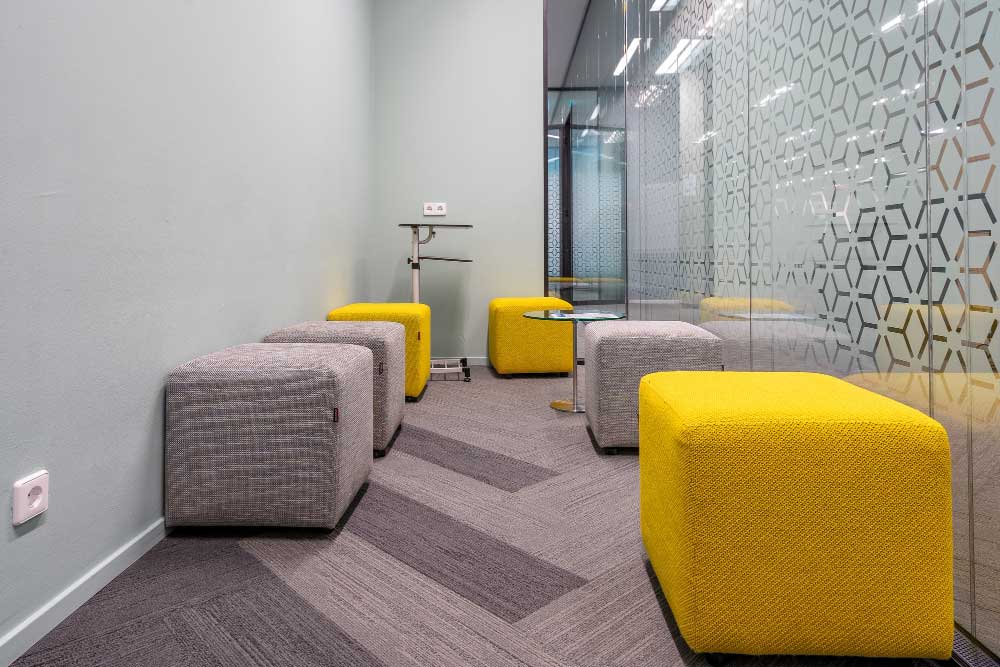
A grey tile may appear warmer beside timber furniture, cooler under bright office lighting or darker in a corridor with limited natural light. Linear and patterned tiles can also look different when several pieces are placed together.
Check the samples beside:
- Wall colours
- Furniture
- Joinery
- Existing flooring
- Natural and artificial light
- Brand colours or interior finishes
This gives a more realistic view of the completed floor.
Make the Final Decision From the Full Specification
A good carpet tile selection combines suitable fibre, dense construction, stable backing, appropriate performance information and a design that works within the interior.
The strongest product is not automatically necessary for every room, and the cheapest tile is not automatically poor value. The correct choice is the one that matches the traffic level, maintenance plan, project duration and installation conditions.
A clear product comparison also makes it easier to receive an accurate quotation because the supplier and installer understand what the floor needs to achieve.
To compare products, review samples or organise a site measure, arrange a free consultation and quote with our team.


