






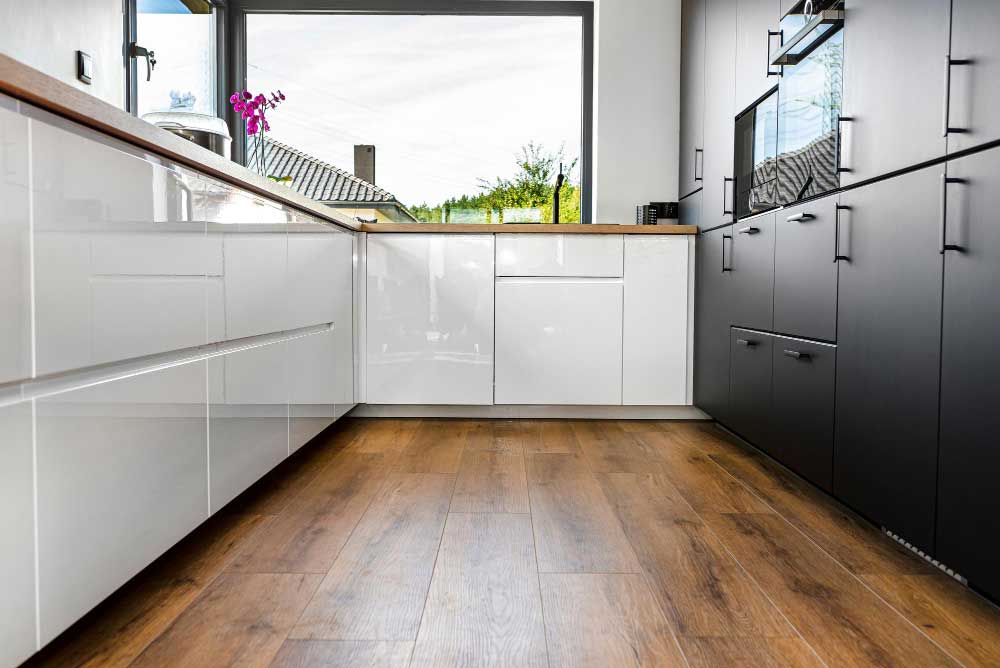
Kitchen flooring deals with conditions that are very different from those in a bedroom or quiet living area. Water around the sink, cooking oil, food spills, cleaning products and grit brought in from outside can all affect how the surface looks and feels underfoot.
If you are considering non-slip vinyl flooring for kitchens in Melbourne, maintenance should be part of the product decision from the beginning. A suitable floor needs to cope with regular cleaning and everyday contamination as well as the expected level of foot traffic.
It is also important to remember that “non-slip” does not mean a floor can never become slippery. Water, grease, detergent residue and other contaminants can affect almost any surface. Where slip resistance is important, check the specification and slip rating of the actual vinyl flooring product rather than relying only on a general product description.
Keeping Kitchen Vinyl Flooring Clean and Slip Resistant
The most effective maintenance routine is usually a consistent one. Removing grit, treating spills promptly and using the correct cleaning product can help prevent layers of contamination from building up on the flooring.
The exact method should always follow the maintenance guidance for the particular vinyl product installed.
Remove Loose Dirt Before Mopping
Start with dry cleaning.
Dust, crumbs, sand and fine grit can spread across the room when a wet mop is used before loose debris has been removed. Abrasive particles may also contribute to visible wear over time, particularly around entrances and frequently used areas.
A simple routine is to:
- Sweep or vacuum loose debris
- Pay attention to room edges
- Clean beneath movable furniture where practical
- Remove food particles before they become pressed into the floor
- Use entrance matting where outside dirt is regularly tracked indoors
Starting with a clean, dry surface allows the wet-cleaning stage to deal with actual residue rather than simply moving loose dirt around the kitchen.
Use the Cleaning Product Recommended for Your Vinyl Floor
Using more detergent does not necessarily produce a cleaner floor.
Too much cleaning solution can leave residue behind, particularly when it is not diluted correctly. In kitchens, that residue may combine with grease, food contamination and everyday soil.
The result can be a floor that appears clean but develops a film across the surface.
Check the maintenance instructions for the actual vinyl flooring product and follow the recommended:
- Cleaner type
- Dilution rate
- Mop or cleaning equipment
- Rinsing requirements
- Cleaning frequency
Avoid assuming that a DIY cleaning method is suitable simply because it is widely recommended online.
Strong chemicals, abrasive cleaners, waxes and polishes may not be appropriate for every vinyl surface.
Clean Kitchen Spills Promptly
Water, cooking oil, sauce and detergent create very different types of contamination.
Treat spills according to what has actually reached the floor rather than using the same method for every situation.
For an everyday kitchen spill:
- Remove loose food or debris.
- Blot or wipe up liquid without spreading it further.
- Clean the affected area using the method recommended for the flooring.
- Remove any remaining residue where required.
- Allow the surface to dry before normal foot traffic resumes.
Grease deserves particular attention.
A thin layer of cooking grease can remain on a floor even when the surface does not look obviously dirty. Areas near cooktops and food-preparation zones may therefore need more frequent cleaning than the rest of the room.
Do Not Leave Excess Water on the Floor
Vinyl flooring is commonly selected for kitchens because it can cope well with regular cleaning and moisture exposure, but routine maintenance should still be controlled.
Avoid unnecessarily flooding the floor or leaving dirty cleaning water sitting around:
- Edges
- Doorways
- Transitions
- Skirting
- Fixed cabinetry
- Joins within the flooring system
Use the amount of moisture and cleaning solution recommended for the installed product.
This is particularly important where several different flooring materials meet, because the surrounding materials may have different moisture tolerances.
Pay More Attention to High-Risk Kitchen Areas
Kitchen floors rarely become dirty at the same rate across the entire room.
Some areas naturally receive more contamination.
Typical high-attention zones include:
- Sink and dishwasher areas
- Cooktop
- Food preparation zones
- Refrigerator
- Kitchen island
- Bin and recycling area
- External or garage entrances
- Dining-area transitions
The area in front of the cooktop may collect fine cooking grease, while the floor near the sink may receive regular water exposure.
Rather than cleaning every part of the kitchen identically, increase spot cleaning where contamination occurs most often.
Keep Mops and Cleaning Equipment Clean
Cleaning equipment can become part of the problem if it is not maintained properly.
A dirty mop may redistribute grease and soil instead of removing it.
Rinse cleaning equipment thoroughly and replace dirty cleaning water when required. Repeatedly mopping the kitchen with water that has already collected dirt and grease can leave contamination behind.
For larger or commercial kitchens, make sure the equipment and cleaning process are appropriate for both the flooring and the type of contamination being removed.
Avoid Unapproved Polishes and DIY Anti-Slip Treatments
A product designed to make a floor shinier is not necessarily suitable for slip-resistant vinyl flooring.
Polishes, dressings and surface coatings can change the appearance and characteristics of the flooring.
Before applying any treatment, check whether it is approved for the installed product.
Be particularly cautious with DIY products promoted as a way of making flooring “less slippery”.
Changing the surface with an unapproved coating is not a substitute for choosing appropriate flooring and maintaining it according to the manufacturer’s instructions.
If slip resistance is a key requirement for the kitchen, it is better to assess slip-resistant vinyl flooring options for kitchens before installation and check the relevant product specifications.
Inspect the Floor After It Has Dried
Do not judge the result of cleaning while the flooring is still wet.
Once the surface has dried, look for:
- Oily or shiny areas
- Sticky patches
- Detergent residue
- Streaking
- Dirt remaining in textured areas
- Damage around edges or joins
- Areas that feel noticeably different underfoot
If the same area repeatedly feels greasy after cleaning, the problem may be the cleaning method, product dilution or frequency.
It is also important not to assume that every surface problem can be solved by stronger cleaning.
Damage, wear or installation problems may require investigation rather than more aggressive chemicals.
Consider Cleaning Requirements When Comparing Flooring
Maintenance should be considered before the flooring is purchased, not only after installation.
When comparing products, think about how the kitchen is actually used.
Ask:
- How often will the floor need cleaning?
- Is cooking grease likely to be common?
- Are there children or pets?
- Is the kitchen connected to an external entrance?
- Will the floor extend through a dining or living area?
- What cleaning products does the manufacturer recommend?
- Is there a documented slip rating for the selected product?
- What maintenance is required to preserve its appearance?
Colour and texture can also affect how easily marks are noticed.
Very light and very dark finishes may show different types of contamination, while textured surfaces may require a different cleaning approach from smoother ones.
Where possible, view several physical samples and read the technical and maintenance information before making the final selection.
Residential and Commercial Kitchens Have Different Demands
A residential kitchen and a commercial food environment should not automatically be treated as the same application.
A household kitchen may experience short periods of heavy use around meals.
A café, restaurant, staff kitchen or food-preparation area may experience:
- Longer operating hours
- Higher foot traffic
- More frequent cleaning
- Greater grease exposure
- Different cleaning chemicals
- More demanding slip-resistance requirements
For commercial applications, the selected flooring needs to suit the expected operating conditions and relevant project requirements.
The phrase “kitchen flooring” alone does not provide enough information to determine whether a product is appropriate.
Know When Cleaning Is Not the Real Problem
If part of the floor repeatedly feels unsafe even after it has been cleaned correctly, maintenance may not be the only issue.
Possible causes can include:
- An unsuitable product for the environment
- Surface wear or damage
- Persistent contamination
- Damaged edges or joins
- Movement in the flooring
- Changed operating conditions
- An installation-related issue
Review the flooring specification and installation condition before repeatedly changing cleaning products.
Using increasingly aggressive chemicals can create additional problems without addressing the underlying cause.
Follow a Simple Kitchen Vinyl Maintenance Routine
A consistent maintenance routine is generally more useful than occasional heavy cleaning.
Use this checklist as a practical starting point:
- Remove grit and crumbs regularly
- Clean spills promptly
- Follow the flooring manufacturer’s cleaning instructions
- Dilute cleaning products correctly
- Avoid unnecessary waxes, polishes and coatings
- Keep mops and cleaning equipment clean
- Give additional attention to grease-prone areas
- Use suitable entrance matting
- Inspect edges and high-traffic areas
- Keep the product maintenance guide for future reference
The exact routine should still be adjusted to the particular vinyl flooring product and how the kitchen is used.
Choose Kitchen Flooring With Maintenance in Mind
The right kitchen floor needs to remain practical after installation day.
Appearance matters, but cleaning frequency, spills, traffic, surface characteristics and maintenance requirements should also influence the decision.
For kitchens where slip resistance is important, compare the actual product specifications rather than choosing flooring based solely on colour or appearance. The goal is to select vinyl flooring that suits both the room and the way it will be maintained.
To discuss suitable products, assess the existing floor and understand the installation requirements, request a vinyl flooring measure and installation quote from Melbourne Flooring.